Thursday, 14 March 2013

Why my Dream Home is 261 Sq Ft (Seriously)


            I really want to live in a tiny house some day.  I’ve been dreaming about it for a while now.  Several acres with trees (probably some of them apple trees) and room for a huge garden, and nestled between the trees a small house, like something out of a storybook.  The Bodega from Tumbleweed tiny homes would be perfect.  While part of this tiny house dream is the romantic dream of a little cottage surrounded by nature is the practicality of a small home. 
             First the cost of a tiny home is lower.  Material costs for the Bodega are estimated at $22,500 and it is possible to do all or most of the building yourself in order to save on labour.  While cost of land varies enormously from place to place I can buy a lovely 3 acre lot in the middle nature for $80,000 in my neck of the woods.  While there are a few houses (or trailers) in the area that cost less then $100,000, they don’t own 3 acres of land.  In fact with 20% down, 25 year amortization and 3.5% interest (the current prime) your mortgage would be only $399.42 a month.  Add to that lower heating, insurance, property taxes, and maintenance and your housing costs drop like a rock.  
            Second, smaller houses are much more ecologically sustainable.  They use up less building materials and produce less waste during their construction.  Since they have a smaller footprint they disturb less of the local ecosystem allowing us to live alongside nature instead of cutting it down.  Then there is the aspect that the smaller utility bill is more likely to be able to be covered by alternative and sustainable energy sources. 
            Finally, a smaller house will allow me to simplify my life.  By reducing your storage space you are much less likely to store things that you simply don’t need.  I’m probably not the only person who owns 6 mixing bowls and only uses two of them.  Less stuff means less to maintain and buy leaving more money, time, and energy to spend on what really matters. 
            I won’t be getting into my tiny house any time soon.  That will need to wait for my retirement and when I’m done raising kids since my dream house only has one bedroom.  Some day though, some day I’ll live on my own little slice of heaven with only what I need on hand and the financial freedom to do what ever I want.  

Wednesday, 13 March 2013

The Second Sober Though


            During the process of buying my first home, and first car, I became a big fan of what I like to call “the second sober thought.”  Big purchases tend to involve a fair bit of emotion in the process, especially if it’s a house you’re going to be living and raising a family in.  I like to think of myself as a fairly rational and logical person especially when it comes to my money.  Turns out I was getting a little bit overconfident. 
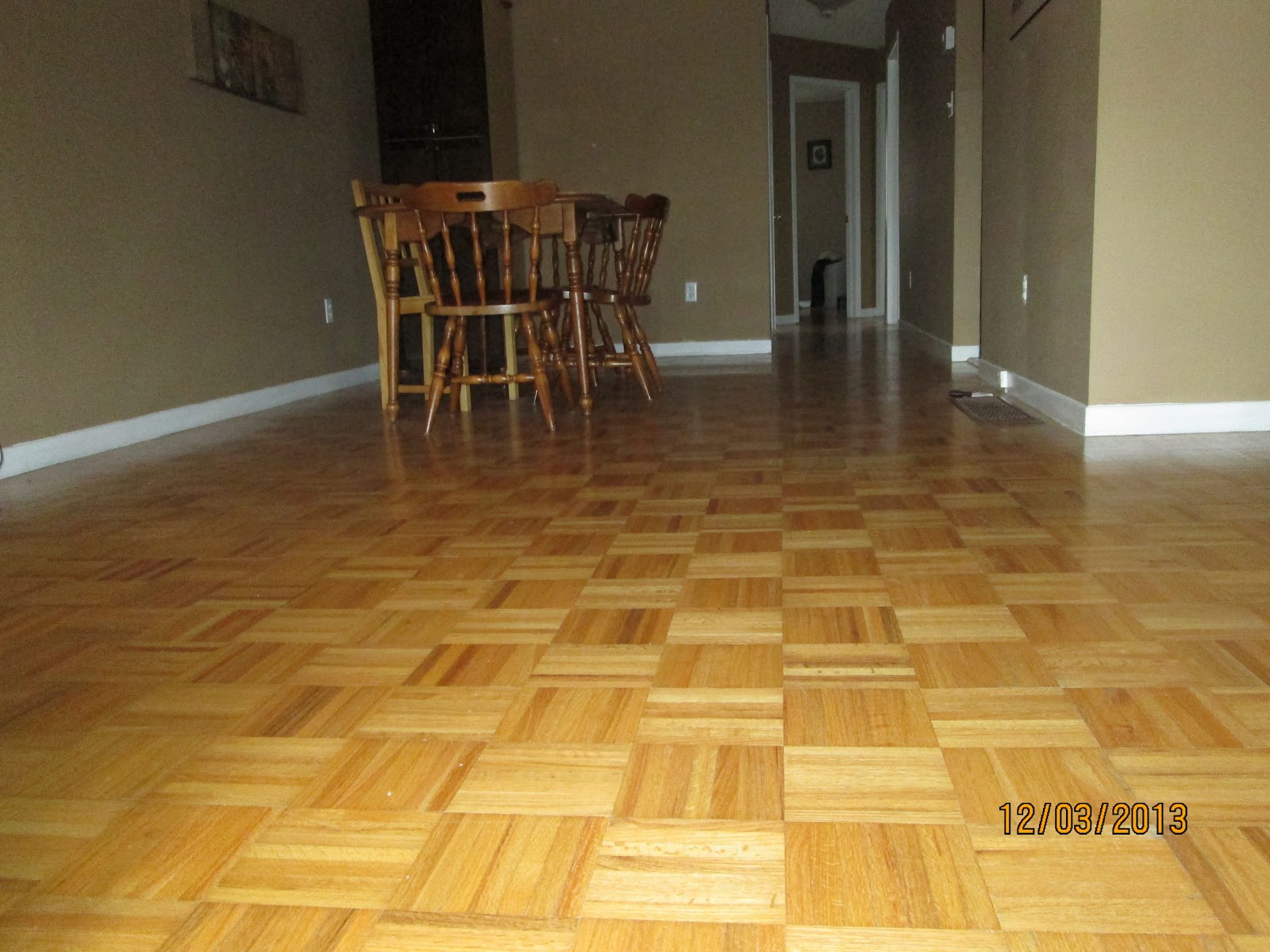
            During my house inspection (the second one on the house I eventually bought) I brought along my parents.  As we worked through the various structures of the house we ended the inspection upstairs, where almost all the floors are finished with parquet flooring.  The floors in my house are a bit beat up, in some places they’ve lost their gloss and in other places there are gouges in the floor.  Off handed I commented that the floors up stairs would have to be replaced.  My father became the second sober thought.  Why would you need to replace it?  He asked.  Though my floor is somewhat worn it is still in one piece and as long as I don’t pour water on the places that have lost their varnish (which I should be able to avoid) they should last a long while yet.   Turns out the only reason I wanted new floor is that parquet is kind of old school, and after four months in the house I don’t even notice the type of floor I have.  My money is better of spent elsewhere. 
            A couple of months later I lost the use of the car I was borrowing and was considering buying myself.  I was back and forth on the issue, while I really didn’t want to go carless (how would I get around?) I wasn’t sure how to make it fit into my budget.  Fortunately the first car I enquired about fell through and I was back at the drawing board.  At this point my father mentioned that most people in our society don’t truly need a car.  It is simply something that is socially acceptable to do.  I wasn’t sure if I could get everywhere I wanted to go without a car but decided to try it and see what happened.  It’s been two months and I love being carless.  No payments, insurance, maintenance or gas and I don’t have to shovel my drive way. 
            So where do you go for a sober second thought?  Try to find someone who you trust who has no stake in the purchase.  Hopefully they will have a good bit of common sense and financial know how.  For me it’s often my father.  Who do you go to for a sober second thought?  

Monday, 11 March 2013

Housing Needs and Wants


One of the basic financial rules when buying a house is not to buy more house than you need.  The larger the house the greater the drain on the planet’s resources, and financially a house larger than you need is going to cost you big time.  You’ll need a larger down payment, have larger monthly mortgage payments, pay more property taxes, have a larger utility bill, pay more for your insurance, and inevitably you will pay more to maintain the house.  All of these are very sound reasons as to why you should buy only the amount of house that you need.  That said I have a bit of a confession, I bought much more house than I currently need.  (There’s a good reason why, promise.) 
When I started my house hunt I had three non-negotiable criteria, two were logical and one was emotional.  First, the neighborhood had to be safe.  Second, it could not surpass my budget of $200,000.  (Incidentally the bank was willing to lend me more.)  Third, I was not living in a box in the sky, aka a high rise condo.  (I know it’s picky but after four years living in a box in the sky I really wanted a yard again.) 
My selection was somewhat limited due to my criteria and I ended up buying a three bedroom 900 sq feet (plus finished basement) bungalow.  Two of the bedrooms are unused and two of the rooms (a sitting room and a half of my family room).  The easy excuse is that there was nothing smaller on the market, the problem is there was.  I also saw a one bedroom house (with no extra rooms) that was about $20,000 dollars less than the home I purchased.  The reason I went for the lager house is quite simple, I want this house to last me at least 10 years.  The smaller house had room only for me and perhaps a significant other.  There was no room for children, foster or otherwise, and I fully expect children to enter my life within the next 5 years.  For an extra $20,000 I bought a house that I could slowly grow into as opposed to a house that I would quickly out grow. 
That said, I did not buy a house that cost more then I can afford.  My fixed housing costs are only 40% of my income, which is reasonable considering I have no other debt.  When looking for a house you’re going to want to make sure that it is one that you will love for a long time, just make sure you can afford it in the long term as well. 

Sunday, 10 March 2013

The Income Distribution Curve

One of the blogs that I follow had a post last week that has had me thinking for quite a while. You can check out The Simple Dollar’s article here. Or you can get the short version and watch the video below.


The questions that kept coming to mind were what about the bottom 10% and why would you want to climb the income distribution curve?

The 7-min movie spends a lot of time pointing at the top 1% as being a problem in America since they hold the lion’s share of the wealth. What it doesn’t tell us about are the people at the bottom of the curve. Such as how many people are below the poverty line and how this impacts their ability to provide the basic essentials of life. I don’t see one person having a lot of money as a problem. I do see people not having enough money to meet the basics of living as a problem. Yet the video is more concerned at vilifying those with money than looking at the issues surrounding those who do not have enough.

The article goes on to provide advice on how to climb the income distribution. I don’t understand why you would make climbing the curve of wealth a life goal. Once you have enough to pay for your needs and have something saved for the future, why would you spend your life energy chasing a larger dollar value for your bank account? I fail to see how a net value twice what you need to live on would make you any happier than just what you need to live on.

Make sure that you have enough to live on. Then make sure that your neighbors have the same. Once these are taken care of, spend your life in the pursuit of happiness. And, personally, I have never seen happiness come with a dollar value.

Saturday, 9 March 2013

Book Review It’s Your Money


I thought I’d take the chance on the tail end of Women’s Money Week to post a book review on a book by non-other then Gail Vaz-Oxlade.  Anyone who’s been on the personal finance scene, especially in Canada, will know that Gail is considered a guru when it comes to finances.  Fitting the theme of the week “It’s Your Money” was written to provide financial advice specifically for women. 
It breaks down into four parts, the psychology behind money, general information on a variety of financial subjects, life events, and “just in case” scenarios.  The first section I found by far the most helpful and the most interesting.  Here Gail talks about how people think about money and how this affects their day to day interactions with money.  Going a step further Gail provides a number of questionnaires to help determine your “money personality.”  Since your money personality helps to determine what types of money problems you may encounter (yes even misers like me have money issues) it gives you ideas and types on how to deal with potential problems.  If you’re one half of a couple these quizzes may help to clarify how your other half thinks about money. 
The second section covers topics seen in most personal finance books, goals, budgets, emergency fund, credit, housing, investments, insurance, taxes and wills.  The information is presented in a conversational and understandable way.  That said the information provided is very similar, if not identical, to the advice provided in any other personal finance book.  On most topics the book provides a good foundation on the subject, however I would recommend further reading and research on most of the subjects before making a decision that fits you best. 
The third and fourth parts cover a variety of life events and scenarios that could change how you manage your money.  From having a baby to becoming the sole breadwinner Gail breaks down the financial changes that you will likely be changing.  There is good advise on when you should make changes to your financial plan as your life changes. 
Though this book is directed at women to help them take care of their own finances I found that most of the advise, despite the feminine pronouns, is gender neutral.  The life changes and “just in case” scenarios are of equal value to males.  Though I do concede to the points made at the introduction, women are still at a financial disadvantage in many areas, I do not believe that the lessons required to remedy these problems are gender specific.  Both males and females can benefit from the advice in this book and I would highly recommend it to anyone who is new to the world of personal finances or who is undergoing a major life change.  

Thursday, 7 March 2013

Future Planning and Financial Planning – Planning for an Uncertain Future


I use to have my whole life planned out.  From the age of 18 I could give you details of where I would be in 5, 10 and 50 years.  Everything from how my career would develop (become a registered nurse, get two years of experience in the military, return to do my medical degree, a nice long career in the Canadian Forces with many deployments, and then retirement at the mandatory age.)  Then life started to happen and my perfect life path started getting rocky so I started making more plans.  I had plans B through to G and contingencies for all of them.  Then, due to an injury, all those plans got scrapped and I ended up not on the path I had planned since I was a teen but the road not chosen.  (Hence the title of my blog.)  It’s been 4 months since my medical release from the military and I have been slowly rebuilding my life. 
The problem is that for a girl who once had a plan for everything I’m not so sure that I can trust what I plan to come next.  Losing my dreams was not just hard and painful it also led to a lot of uncertainty.  While I was graduating and most of my nursing friends were pulling their lives together and getting their first real job my life was unraveling and I was losing the only job I had ever wanted.  I was terrified while waiting for my small salary to end because I had no idea how to replace it.  A nurse with no experience who cannot stand for more then an hour or two is not someone most hospitals will hire. 
Things have got better in the past four months, a job that I really enjoy was offered to me by the father of a friend.  I’m hoping to start a master in the fall and have even set down roots in a nice small town.  Still thinking back to 6 months ago puts my stomach in knots and I’m hesitant to make long term plans, I now know how easily it can all come apart.  That said I’ve learned a lot from what I’ve been through. 

1. Make your plans dynamic.  It’s great to have your eye on that perfect job, but don’t let your dedication to one option blind you of all the other options that are out there.  I ended up in research and am sad to say I never considered it while doing my training because it simply didn’t fit into what my vision of what a military nurse/doctor did.  (Even though many medical personnel in the military profession do research.) 
2. Embrace change.  It can hurt, and can you feel that you’ve lost something but change forces you to grow.  None of us can ever stand still as much as we may want to.  Keep your feet moving forward so that if one path gets blocked you can easily continue on another. 
3. I am strong, capable and talented.  Having the rug pulled out from under me showed my just how capable I am of providing for myself.  I navigated a system that can only be described as a bureaucratic nightmare and came away with what I needed.  I found a job because someone I had never met before started talking with me and decided that I would be an asset to his company.  I didn’t need to move home and have my parents take care of me (though I did camp out there a couple of weekend while house hunting) instead I bought my own home at 22, with money that I alone had earned and saved.  I took care of myself when things got rough and if necessary I can do it again.  And guess what?  You can do it too. 

I still have big dreams for my future but now I know that they won’t turn out the way I see them today.  They are going to change as I move towards them.  Some will have to be put on the back burner at points, but at the same time new ones will appear.  Planning for the future isn’t about having all the right answers; it’s about being willing to ask the right questions.  

Wednesday, 6 March 2013

Happiness, Hobbies, and Money - Fun that keeps going and going . . .


Money is a finite resource.  We all know that.  We all have only a certain number of hours in a day, so much energy, and so much creativity to put into acquiring it.  While I mainly think of money as a means to fulfill needs and to provide security, it has another purpose as well.  It allows us to do things that we enjoy.  I play a pretty good offensive game when it comes to spending my money so when I do spend it I want to make sure that I get as much bang-for-my-buck as possible. 

The easiest way I find to do that is to look for fun things to do that I will enjoy long after I’ve spent the money.  As a read-a-holic I know that if I buy every book I want to read I won’t have a red cent left in the bank.  Instead I buy books that I know I will read over and over again (usually because I’ve borrowed them at least 5 times from the local library.) Some of the books on my shelf I have literally read 20+ times since I bought them. 
I have hobbies that produce something useful.  When I go to my sewing machine often I will come away with a project that I know I will use over and over again.  I make a quilt because I need another blanket for one of my beds or to give as a gift to some one special.  Even the cross stitches are useful as they are cheaper then buying “good” art to hang on the wall. 
I spend money on learning things I enjoy, such as another language.  Sure it can be an expensive hobby, but once I learn the basics of a language I can build on it by myself with resources that are free on the web or from the local library.  Plus it opens amazing doors to communicating with others and making friends. 
Finally I spend money on travel, which does end when you get back home.  However, it builds memories and photographs often come home as mementos.  It teaches you about other places and cultures.  In some places you even get a glimpse into the past.  On the whole though travel is expensive it allows you to learn new things, expand as a person and build memories to last a lifetime. 
While a $10 movie is fun for 2 hours I much prefer to spend my hard earned cash on stuff that I will enjoy much, much longer.  What do you spend money on for fun?